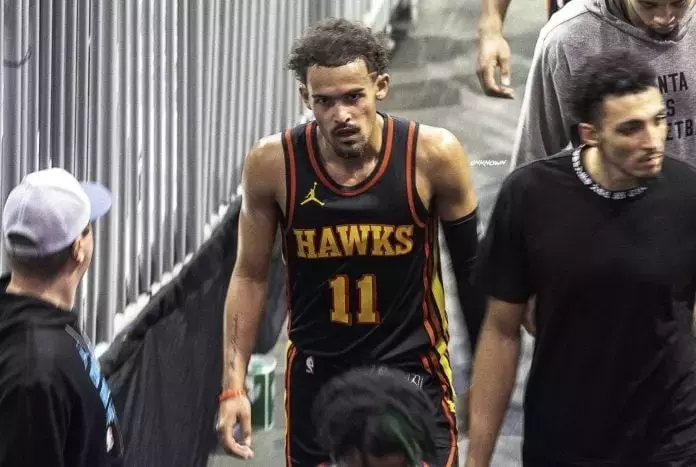
The Atlanta Hawks face a critical juncture regarding their franchise cornerstone, Trae Young, whose contract extension talks have reportedly reached an impasse. Despite being eligible for a new deal, no agreement has materialized, leading to Young's reported frustration and his decision to play out the current season before revisiting his long-term future. This situation casts a shadow over the team's ambitions, particularly as they actively retool their roster with new acquisitions and returning players, aiming for increased competitiveness in the Eastern Conference. The uncertainty surrounding Young's contract is compounded by similar negotiations with other key team members, highlighting a period of significant transition and strategic decision-making for the Hawks' management as they strive to build a formidable unit.
This ongoing contractual saga for Trae Young is not just about a player's compensation; it's a pivotal moment that could redefine the Atlanta Hawks' trajectory. With the potential for a "supermax" contract looming if Young achieves All-NBA honors, the financial implications are substantial, offering him significant leverage. Concurrently, the Hawks are making strategic moves to bolster their lineup, suggesting a commitment to surrounding their star with enhanced talent. However, the lack of resolution on Young's extension, alongside other impending contract decisions like that of Dyson Daniels, means the team enters the upcoming season with lingering questions about its core foundation. The outcome of these negotiations will undoubtedly shape the Hawks' roster composition and their competitive outlook for seasons to come, demanding careful navigation from all parties involved.
Contractual Crossroads for Atlanta's Star
Atlanta Hawks' dynamic guard, Trae Young, is reportedly expressing dissatisfaction over the lack of progress in securing a contract extension. Despite becoming eligible for a new agreement this summer, discussions have yet to yield a resolution, prompting Young to consider playing through the upcoming season on his existing deal. This decision effectively postpones any definitive choices regarding his future in Atlanta until the subsequent offseason. The delay creates an element of suspense for the franchise, which is keen on retaining its star player while also strategically building a more competitive team around him. The financial implications for both player and team are considerable, with potential for a much larger contract if Young meets certain performance incentives.
The current state of affairs sees Trae Young, a prolific scorer and playmaker, facing an uncertain contractual landscape. His current agreement includes a substantial player option for the 2026-27 season, providing him with a degree of control over his career path. Under existing league regulations, Young is eligible for a four-year extension valued at over 2 million. However, the stakes could rise significantly if he earns All-NBA recognition during the 2025-26 season, which would qualify him for a five-year "supermax" deal potentially worth 5.9 million. This tiered eligibility adds a complex layer to negotiations, amplifying Young's bargaining power. Meanwhile, the Hawks are not idle, having made notable roster adjustments by acquiring Kristaps Porzingis and Nickeil Alexander-Walker, and anticipating Jalen Johnson's return, all in an effort to enhance their squad's overall strength and facilitate a deeper playoff run.
Hawks' Roster Evolution Amidst Uncertainty
Beyond Trae Young's situation, the Atlanta Hawks are navigating a period of significant roster transformation. The team has actively pursued additions and is anticipating the return of key players, signaling a clear intent to elevate their standing in the Eastern Conference. However, these strategic moves are occurring concurrently with unresolved contract issues, which introduce a degree of uncertainty. The franchise's efforts to enhance its competitive edge are crucial for attracting and retaining top talent, but the ongoing contract negotiations underscore the complexities of managing an NBA roster, particularly when aiming for long-term success and stability in a highly competitive league.
The Atlanta Hawks' offseason has been marked by proactive measures to strengthen their roster, including the acquisitions of veteran big man Kristaps Porzingis and versatile guard Nickeil Alexander-Walker, alongside the promising rookie Asa Newell. Furthermore, the return of Jalen Johnson, who was sidelined by injury last season, is expected to provide an additional boost. These personnel changes reflect the team's commitment to building a more formidable lineup capable of challenging for contention. Yet, the team's strategic planning extends beyond Young's contract; Dyson Daniels, who shares the backcourt with Young, is also eligible for a rookie scale extension, with a deadline before the regular season commences. Should no agreement be reached, Daniels would enter restricted free agency, giving the Hawks the right to match any external offers. These concurrent contract situations weave a compelling narrative for the Hawks as they prepare for a pivotal season, striving to solidify their core and re-establish themselves as a competitive force in the Eastern Conference.