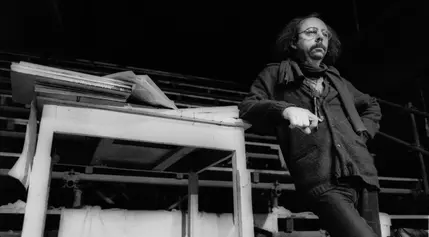
Richard Foreman, the influential avant-garde theatre director, passed away on January 4th, 2025, at the age of eighty-seven. His death marks the end of an era characterized by bold artistic experimentation and vibrant cultural innovation in New York City. Foreman was part of a generation of artists who transformed late-twentieth-century Manhattan into a global performance hub. Known for his rigorous philosophical approach and innovative theatrical techniques, he left an indelible mark on the world of experimental theatre. From his early days staging plays in unconventional spaces to his later years collaborating with prestigious institutions, Foreman's work exemplified the spirit of downtown New York—a place where creativity thrived amidst affordable housing and collaborative projects.
A Journey Through Time: The Life and Work of Richard Foreman
Born and raised in Scarsdale, Foreman studied English at Brown University and playwriting at Yale before finding his true calling among New York's experimental filmmakers. In 1968, he launched the Ontological-Hysteric Theatre with "Angelface," a play staged in Jonas Mekas’s Film-Makers’ Cinematheque. This marked the beginning of a lifelong project that would redefine the boundaries of theatre. For decades, Foreman's productions were housed in a narrow space at 491 Broadway, and later in the upper chamber of St. Mark’s Church in-the-Bowery. Each year, he would advertise his shows with striking black-and-white posters plastered across the Village, announcing titles like "WAKE UP MR. SLEEPY! YOUR UNCONSCIOUS MIND IS DEAD!"—a call to awaken audiences from their complacency.
Inside the Ontological-Hysteric, Foreman created dreamlike environments that blurred the lines between reality and illusion. His sets were often adorned with black-and-white striped strings, evoking the atmosphere of a circus tent. Performances lasted roughly seventy minutes but felt much longer, as time seemed to stretch and warp. Drawing inspiration from early cinema and surreal literature, Foreman's work was both familiar and entirely unique. He believed that theatre should challenge its audience, pushing them toward new forms of consciousness and self-awareness. His collaborations with actors, technicians, and designers produced a legacy that continues to inspire artists today.
In the nineties, Foreman's reputation grew beyond New York, with international engagements at venues like Lincoln Center and the Festival d’Automne in Paris. His wife, Kate Manheim, was a key collaborator, starring in many of his early works. Though she retired from acting in the eighties, her influence remained profound. Foreman's later productions featured a mix of highbrow philosophy and slapstick comedy, creating a truly immersive experience for audiences. Even in retirement, Foreman continued to leave his mark, with revivals of his work and ongoing collaborations with other artists.
One of the most memorable moments in recent years was a celebration of Foreman's work at N.Y.U., where over a hundred collaborators gathered to honor his contributions. Despite his frailty, Foreman attended the event, engaging in lively discussions and sharing anecdotes about his career. His presence reminded everyone of the enduring impact he had on the world of theatre.
From a journalist's perspective, Richard Foreman's life and work offer a profound lesson about the power of artistic innovation. His ability to blend the obscure with the accessible, the intellectual with the absurd, demonstrates that true creativity knows no bounds. Foreman's legacy is not just in the works he created but in the countless artists he inspired. His insistence on pushing the limits of what theatre can be serves as a reminder that art should always strive to challenge and transform us. In this way, Foreman's influence will continue to resonate for generations to come.